‘I wanted to write a novel that smelled of the works’: Idris Maddox on Scrap, Port Talbot and leaving it late
The former steelworker’s debut, written at 58 in a library on his days off, is the most talked-about Welsh novel in years; he is still not sure he is allowed to call himself a writer
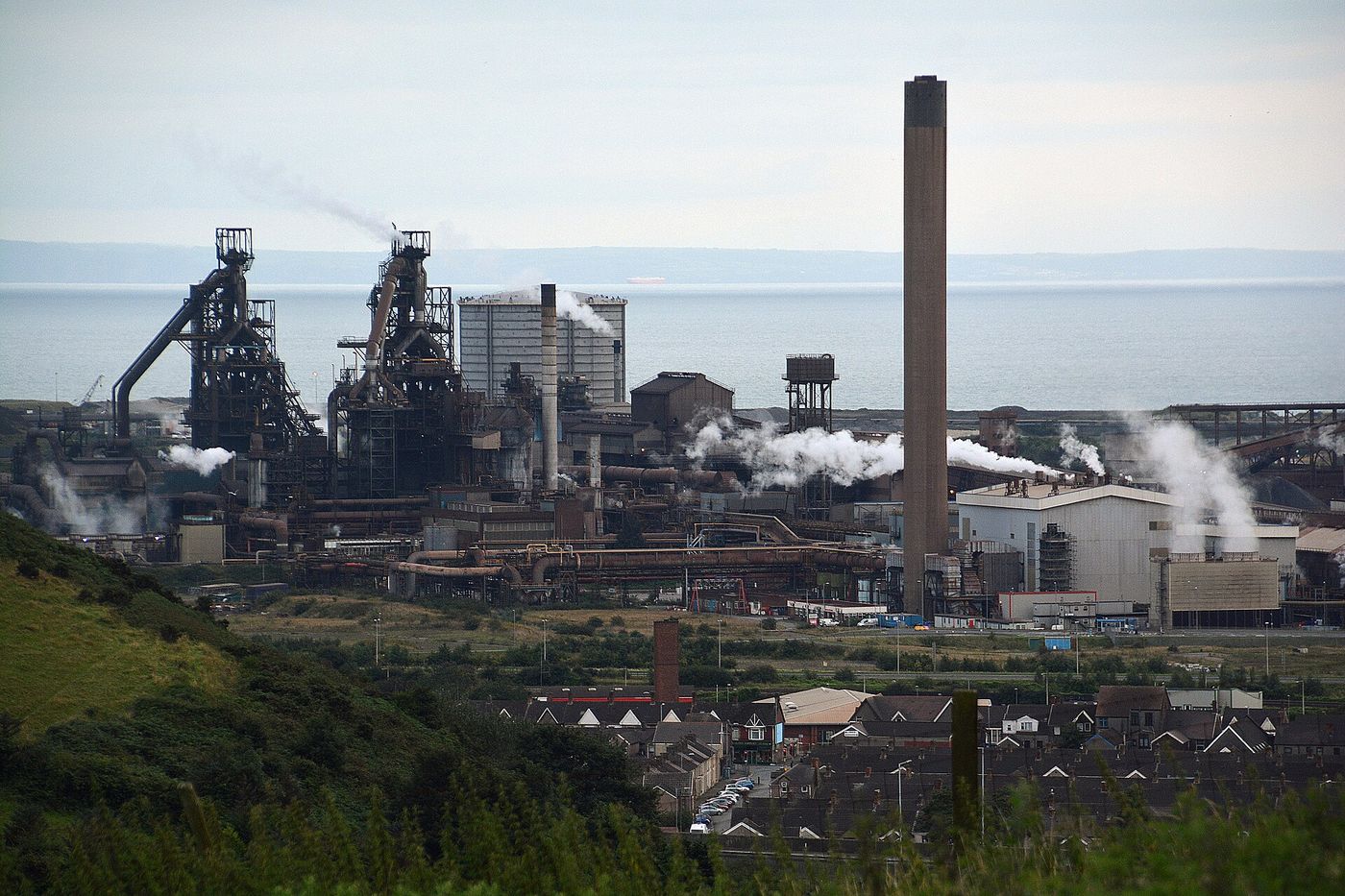
Idris Maddox does not like the word “novelist”. He will use it if pressed, in the way a man might agree to wear a tie for a funeral, but when we meet in a cafe on Station Road in Port Talbot, 400 yards from the works where he spent 31 years, he introduces himself as “retired, from the hot mill”. The fact that his first novel, Scrap, has sold 60,000 copies since August, been optioned for television and been described by one reviewer as the best Welsh novel of the century is something he seems to regard as an administrative error.
“I started it because the library was warm,” he says. Maddox took redundancy in 2023, when the blast furnaces closed, and found himself, at 56, with a pension, a mortgage paid off and nothing to do on a Tuesday. “I went to the library on Station Road because it was free and it was warm and my wife wanted me out from under her feet. I sat down with a notebook and I thought, right, I will write down what it was like, so somebody has. I did not think of it as a book. I thought of it as a record.”
The record became Scrap, which follows three generations of one family through the works from 1962 to the furnaces going cold, and which is written in a prose that is plain, exact and periodically, without warning, beautiful. A passage in which a 19-year-old on his first shift watches a slab come out of the reheat furnace “the colour of a thing that should not exist” has been quoted so often that Maddox is tired of it. “I wanted it to smell of the works,” he says. “Not the view from the M4. The inside. The noise, the heat, the bloke next to you. Nobody had written that down. Not properly.”
He wrote for two years, three mornings a week, in longhand, and did not show anyone until the manuscript was finished. His daughter, who works for a housing association in Cardiff, typed it up and, without telling him, sent it to a small press in Aberystwyth. “She rang me and said they want to publish it, and I said publish what. I genuinely did not know what she meant.” The press, Gwydr, printed 2,000 copies. Word of mouth did the rest; by September it was in its sixth printing and a London publisher had bought the paperback rights for a sum Maddox describes as “more than I earned in my last three years at the mill, which tells you something about one of those two jobs”.
He is wary of the way the book has been received. “People in London want it to be about decline. The end of something. And it is, I suppose. But I did not write it as a lament. The men I worked with were not tragic. They were funny, and they were good at their jobs, and they had a life. I wanted that in before the other thing.” He is also, he admits, uncomfortable with the attention paid to his age. “Fifty-eight is not old. It is just old to start. There are lads I worked with who could write a better book than mine. They just never sat down.”
Is there a second book? He looks at the window for a while. The works are visible from the cafe, the stacks mostly cold now, one of the new electric furnaces due to fire next year. “There is a notebook,” he says eventually. “It is about my mother. I do not know if it is a book yet. I will tell you when the library gets cold.”
Scrap by Idris Maddox is published by Gwydr Press (£12.99).
Sign up to First Edition
Our morning email breaks down the key stories of the day, telling you what's happening and why it matters.
Privacy notice: newsletters may contain info about charities, online ads and content funded by outside parties.