Hester Blyth review – the forgotten painter of Manchester’s canals gets her due at last
★★★★☆ The Whitworth’s retrospective of a woman who painted industrial water for 40 years and was never given a solo show in her lifetime is overdue, beautifully hung and quietly furious
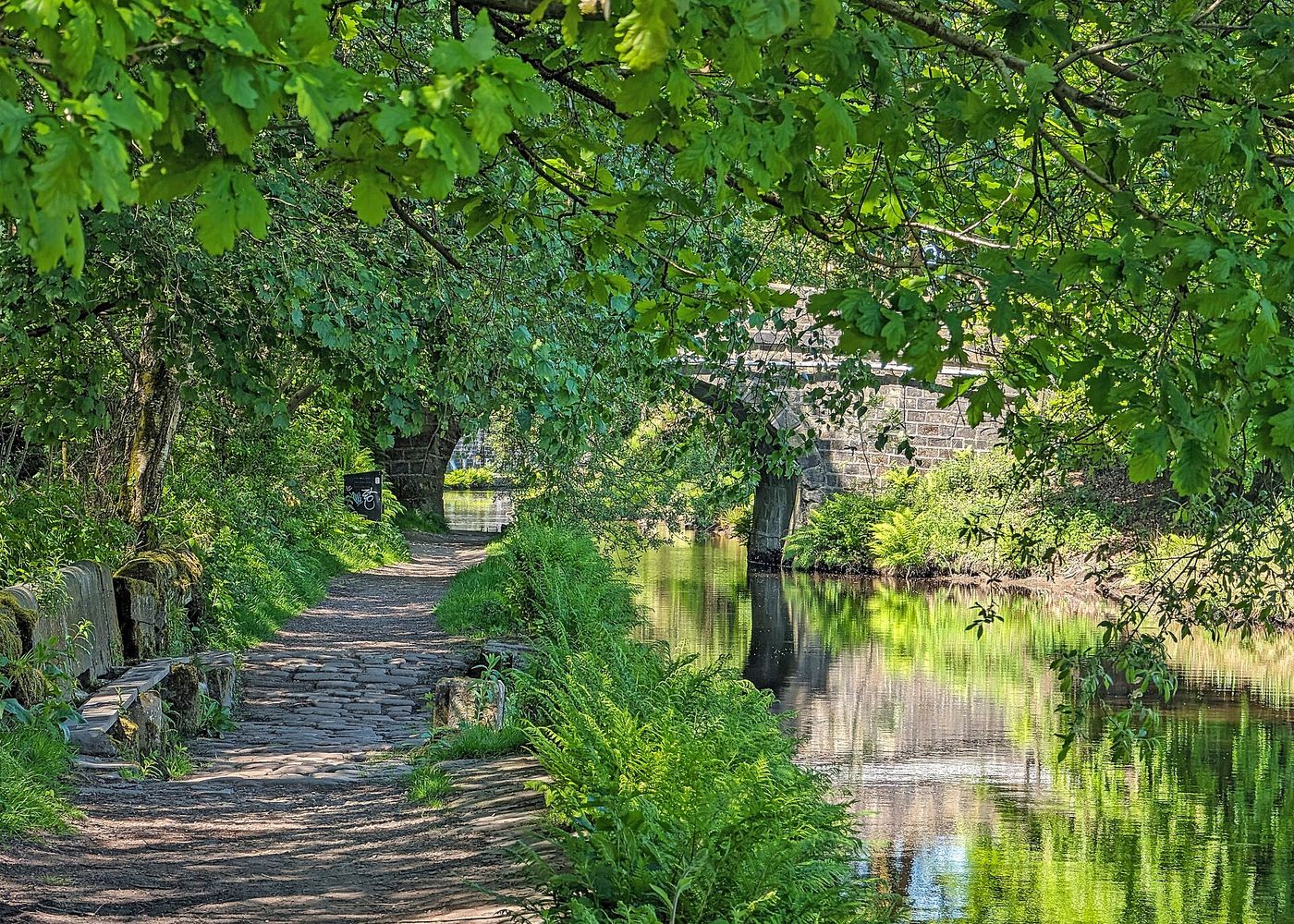
Hester Blyth painted the Rochdale canal between Dale Street and Oxford Road at least 63 times between 1938 and 1976, in every light and most weathers, and when she died in 1979 at the age of 77 she had never had a solo exhibition. The Whitworth has now given her one, 47 years late, and the first thing to say about it is that she was right and the century was wrong.
Blyth was born in Ancoats in 1902, trained at the Manchester School of Art in the early 1920s alongside men who went on to have careers, and spent most of her working life teaching evening classes in Salford while painting in a rented room above a lock-keeper’s cottage. She showed occasionally in group exhibitions, sold to a handful of collectors, and was described in the one newspaper review she received in her lifetime, in 1951, as “a competent painter of dreary subjects”. The Whitworth has put that sentence on the wall of the first room, which is the right decision.
The subjects are not dreary. They are water, mostly, and the way light behaves on water that is black with coal dust and oil. Blyth’s great technical achievement, which the exhibition makes clear by hanging 14 canal paintings in a single long room in chronological order, was a method of building up an oily, iridescent surface in thin glazes that makes a 1950s canal basin look like the inside of a mussel shell. Nobody else in British painting was doing this. The nearest comparison is not a British painter at all but the Venetian lagoon pictures of the 18th century, which she would have seen in reproduction and which she seems to have decided to do again, in Ancoats, in the rain.
The curator, Dr Amira Fallon, has resisted the temptation to overclaim. The wall texts are brief, the catalogue essay is honest about the paintings that do not work, including a group of 1960s portraits that are stiff and dutiful, and the exhibition’s argument is made almost entirely by the hang. A room of small studies, some no bigger than a postcard, painted on the backs of exam papers from her evening classes, is the most affecting thing in the show: here is someone working with whatever was to hand because nobody was going to give her anything else.
If there is an anger in the exhibition it is in the final room, which places her 1974 painting of the canal, done when she was 72 and the basin was derelict, next to a loan from a national collection of a painting of the same stretch by a male contemporary who was knighted. Hers is better. The Whitworth does not say so. It does not need to.
It is a measure of the show’s success that the question it leaves you with is not whether Blyth was good but how many more of her there were, in how many rented rooms, and what else is in the attics.
Hester Blyth: Black Water is at the Whitworth, Manchester, until 14 February.
Sign up to First Edition
Our morning email breaks down the key stories of the day, telling you what's happening and why it matters.
Privacy notice: newsletters may contain info about charities, online ads and content funded by outside parties.