
The Weight of Water by Tom Haskard review – the drowned valleys that built modern Britain
★★★☆☆ A history of the country’s reservoirs is rich in detail about the villages beneath them, but never quite decides whether it is elegy or engineering
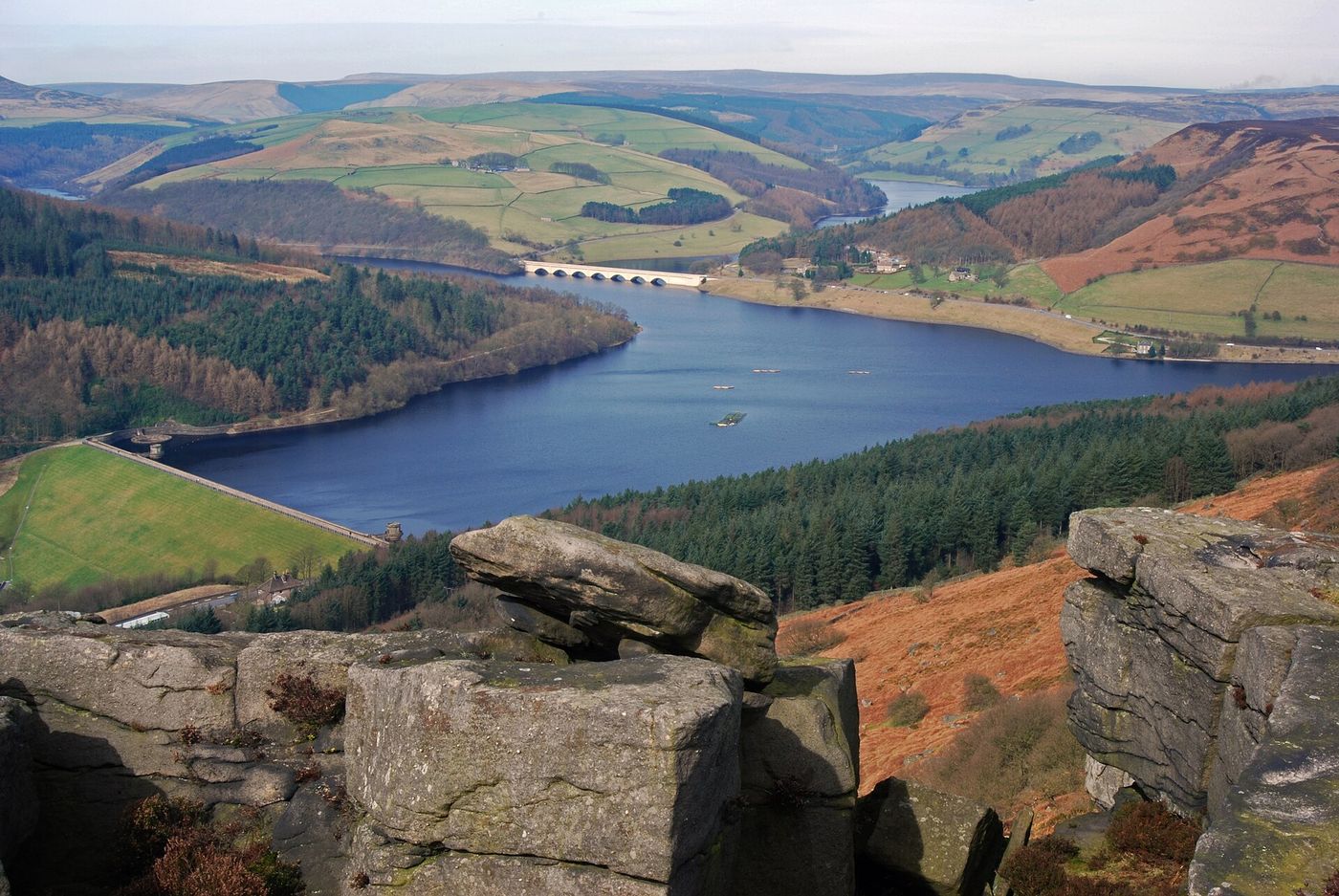
Every few summers, when a dry spell drops the level of a reservoir far enough, a British newspaper runs a photograph of a church tower or a bridge emerging from the mud, and for a day or two the country remembers that its water comes from somewhere and that somewhere was once a village. Tom Haskard’s The Weight of Water is an attempt to turn that recurring moment of national surprise into a proper history, and it is, for about two-thirds of its length, a very good one.
Haskard, a civil engineer by training who now teaches at the University of Sheffield, takes 43 reservoirs built between 1850 and 1975, from Loch Katrine, which first sent water to Glasgow in 1859, to the Kielder scheme in Northumberland, and tells the story of each as a negotiation between a thirsty city and a valley that had to be emptied for it. He is excellent on the engineering, and better still on the politics: the chapter on how Manchester acquired Thirlmere in the Lake District in 1879, over the objections of a campaign that more or less invented the modern conservation movement, is a small masterpiece of archival storytelling.
The human material is extraordinary. Haskard has tracked down parish records, compensation claims and, in a few cases, the descendants of families moved out of valleys in the 1930s and 1950s, and the interviews he reproduces are the heart of the book. A woman in her 90s who remembers the last service in a Derbyshire church before the valves were opened, and who has not been back to look, gets three pages that are worth the price alone.
The difficulty is tone. Haskard is, by his own account, a reservoir enthusiast, and the book keeps turning from the drowned villages to a kind of awe at the dams themselves, their masonry, their spillways, the men who built them. This is understandable, and the awe is well expressed, but it means the book never settles. The chapter on Capel Celyn, the Welsh village flooded in 1965 to supply Liverpool, which remains a wound in Welsh politics, is noticeably more cautious than the engineering chapters around it, as though the author were aware he was on someone else’s ground.
There is also too much of it. At 480 pages, with a 40-page appendix of capacities and completion dates, the book would have been stronger at two-thirds the length, and a brisker editor might have asked whether every spillway needed describing.
But the subject is a real one, and Haskard has done the work. Next time a church tower comes out of the mud, this is the book to read.
The Weight of Water: Britain’s Reservoirs and the Valleys Beneath Them by Tom Haskard is published by Carrick Press (£25).
Sign up to First Edition
Our morning email breaks down the key stories of the day, telling you what's happening and why it matters.
Privacy notice: newsletters may contain info about charities, online ads and content funded by outside parties.