The £300 jumper is back: how the Borders mills of Hawick became fashion’s favourite factories again
Scottish cashmere and lambswool are enjoying their strongest decade since the 1980s, with the mills of one small town supplying half the luxury houses in Paris
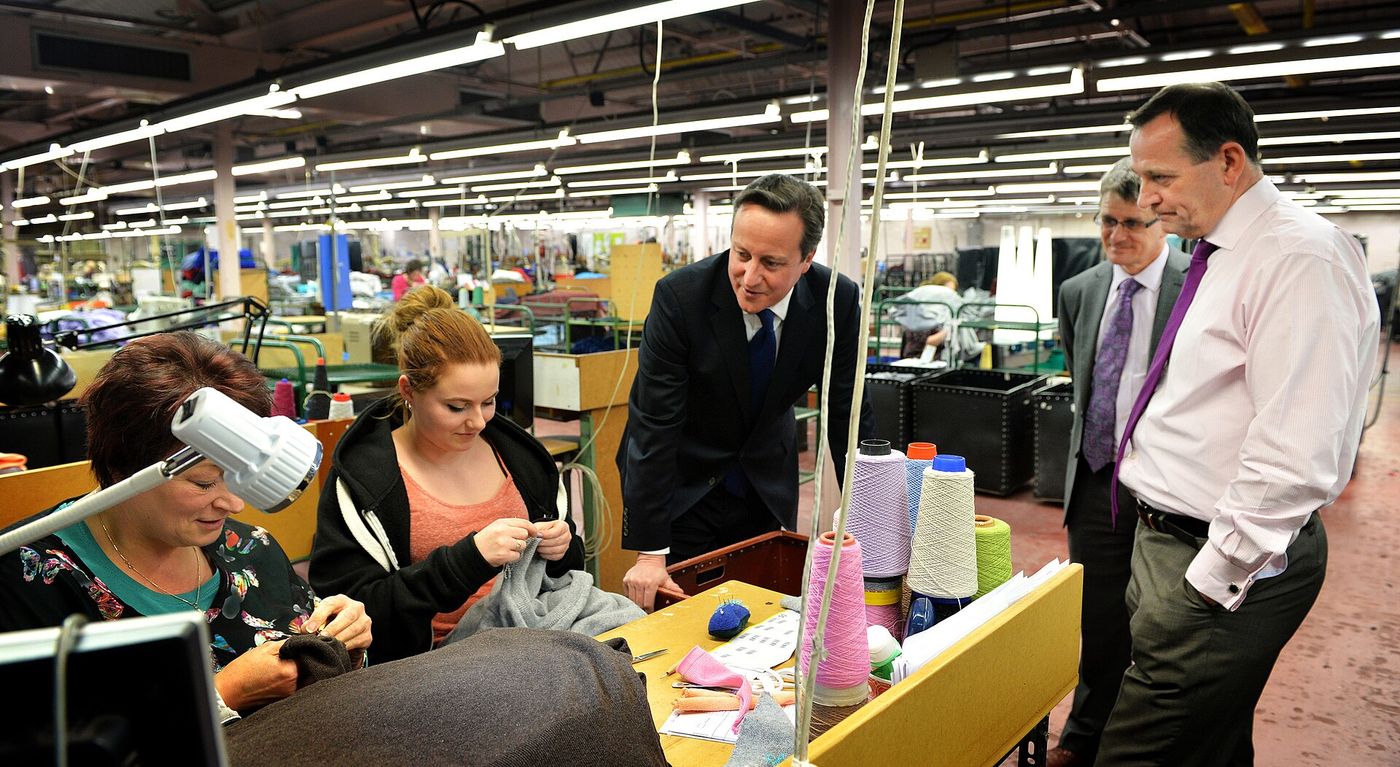
On the floor of a mill on the banks of the Teviot in Hawick, 60 miles south of Edinburgh, a row of German knitting machines the size of wardrobes is turning out crewneck jumpers in a colour the order sheet calls “burnt heather”. They will leave the building with the mill’s own label in the neck, be driven to Paris and sold for around £720 in a shop on the rue Saint-Honoré. The mill keeps, its managing director says, roughly a third of that. “Thirty years ago that sounded like a terrible deal,” said Alasdair Scott, 52, whose family has owned the firm since 1874. “Now it is the best business we have ever had.”
Hawick, a town of 14,000 people that once had 40 knitwear mills and now has about eight, is in the middle of an unlikely boom. Exports of Scottish cashmere and lambswool knitwear reached £218m in the year to June, up 14% on the previous year and the highest figure, adjusted for inflation, since the late 1980s, according to the industry body. Around 60% of that is made in the Borders and most of it in Hawick, where the mills that survived the collapse of the 1990s and 2000s now supply a roster of luxury houses, Japanese department stores and a new wave of direct-to-consumer brands that put “made in Hawick” on the website as a selling point rather than a footnote.
The reasons are partly fashion. The move away from logos and towards quiet, expensive, long-lasting clothes that began around 2022 has been good for plain cashmere, and the current taste for 1990s minimalism has brought back the crewneck and the polo as the thing a certain kind of person wears every day. Partly it is trade: Italian and Chinese cashmere have become more expensive while the pound has stayed weak, and the Scottish mills’ reputation for finishing, the washing and pressing that gives Borders knitwear its particular softness, has become a point of difference the brands are willing to pay for.
And partly it is a change in how clothes are sold. The Hawick mills spent decades making other people’s jumpers and hiding behind their labels. The newer generation sells its own. Scott’s firm launched a direct-to-consumer label in 2021 that now accounts for 20% of turnover, and sells a two-ply cashmere crewneck for £295, which the company says is roughly half what the same garment costs with a French name in it. “We had the machines, the yarn and the people,” said his daughter Iona Scott, 27, who runs the brand. “The only thing we did not have was the confidence to put our name on the front.”
The town is feeling it. Employment in Hawick’s textile mills, which fell from around 6,000 in 1990 to under 1,000 in 2015, has grown back to about 1,400, and the mills say they would hire more if they could find them. A textile college run jointly by the mills and the local authority took 90 trainees this year, its highest intake, and a knitwear graduate who would once have gone to London can now earn £34,000 a year within walking distance of the Teviot.
There are risks, and the mills know them. Cashmere is a fashion as well as a fibre and has been out before; the Chinese yarn that most of the mills use is subject to a volatile market; and the luxury houses that account for most of the orders can be fickle. Scott remembers 2009, when two of his largest customers cancelled in the same month. “We are not planning on the good times lasting forever,” he said. “But I will say this. For the first time in my working life the young people in this town are staying. That is worth more than the order book.”
Sign up to First Edition
Our morning email breaks down the key stories of the day, telling you what's happening and why it matters.
Privacy notice: newsletters may contain info about charities, online ads and content funded by outside parties.