
Robot submarine finds Thwaites glacier retreating 30% faster than models predicted
British Antarctic Survey and Northumbria University team sent an autonomous vehicle 14km beneath the ice to map warm water carving channels into the glacier’s underside
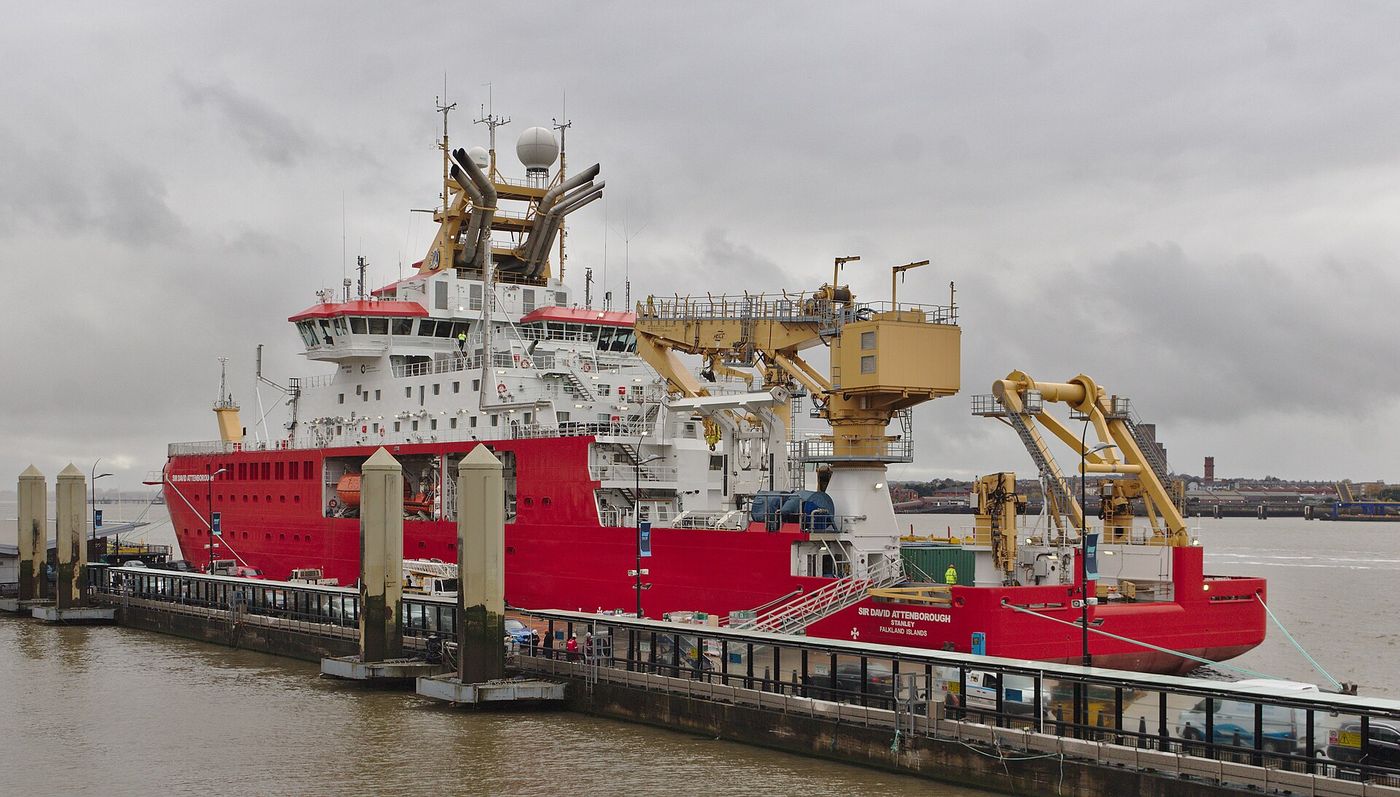
An autonomous submarine that travelled 14km beneath the floating front of Thwaites glacier has found warm water melting the ice from below at rates up to 30% faster than the models used to forecast sea level rise, British scientists said on Tuesday.
The vehicle, a seven-metre torpedo-shaped craft named Aurora, was launched from the RRS Sir David Attenborough in February and made five sorties under the ice shelf, mapping the underside with sonar and measuring temperature, salinity and current. It found a network of channels, some 400 metres wide, through which water at 1.2C above freezing is flowing towards the point where the glacier lifts off the seabed.
Thwaites, in West Antarctica, is roughly the size of Great Britain and holds enough ice to raise global sea level by 65cm on its own. It is widely regarded as the most important single uncertainty in sea level projections because it rests on bedrock that slopes downward inland, meaning that once retreat begins it can accelerate.
“The models have assumed that the melting under the shelf is fairly even,” said Dr Henrik Sørlie of the British Antarctic Survey, the project’s co-leader. “What Aurora found is that it is concentrated in channels, and in those channels it is very fast, up to 30 metres a year. The grounding line has retreated 1.1km since we last had reliable measurements in 2020, and the channels are pointing straight at it.”
The research, published in Science Advances by a team from BAS, Northumbria University and the University of Gothenburg, does not change the long-term outlook for Thwaites, which most models expect to lose its ice shelf this century. But it brings forward the likely timing of that collapse and, the authors say, implies that the mid-range sea level projections used by coastal planners may be too low by about 10cm for 2100.
Prof Catriona Maxwell of Northumbria, who led the modelling, said the finding would feed into the next assessment by the Intergovernmental Panel on Climate Change. “Ten centimetres does not sound like much,” she said. “For the Thames barrier, the Humber or the Severn levels it is the difference between a plan that works and one that has to be redone.”
The mission was the first time a British submarine had operated so far beneath an Antarctic ice shelf. Aurora navigated by sonar and inertial guidance, out of contact with the ship for up to 30 hours at a time, and surfaced through a lead in the sea ice on its final sortie with its battery at 4%. A planned sixth dive was cancelled after the ice closed over the launch site.
Britain spends about £65m a year on Antarctic science through BAS. The Attenborough, launched in 2018 at Cammell Laird on Merseyside, will return to the Amundsen Sea in the 2027-28 season with a second vehicle.
Sign up to First Edition
Our morning email breaks down the key stories of the day, telling you what's happening and why it matters.
Privacy notice: newsletters may contain info about charities, online ads and content funded by outside parties.

