
Kendal’s new flood walls pass first big test as River Kent peaks at highest level since Storm Desmond
The town stayed dry as 96mm of rain fell on the Lake District in 24 hours; the 2015 flood put 2,150 homes and businesses under water
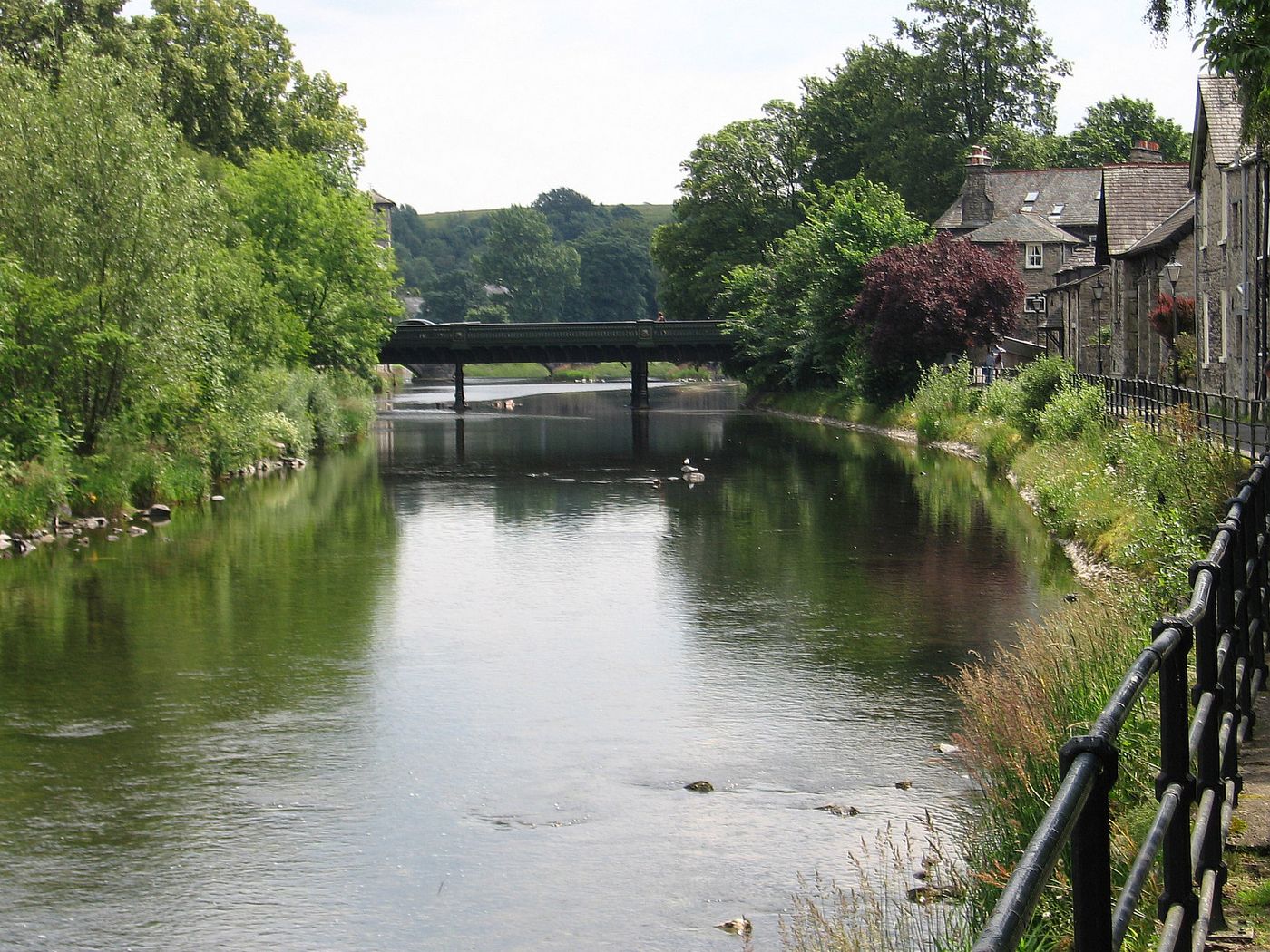
Kendal’s £76m flood defences held back the River Kent on Saturday night in their first serious test, as 96mm of rain fell on the central Lake District in 24 hours and the river rose to its highest level since Storm Desmond swept through the town in December 2015.
The Kent peaked at 4.1 metres at the Victoria Bridge gauge at 11.40pm, 70cm below the record set in 2015 but above every other reading since the gauge was installed in 1968. The Environment Agency said the water had come to within 40cm of the top of the new walls on Aynam Road and Gooseholme, where the old defences had been overwhelmed in 2015. No properties were flooded.
Storm Desmond put 2,150 homes and businesses in Kendal under water, closed the town centre for a month and caused £40m of damage. The defence scheme that followed, the largest the agency has built in the north-west, took seven years, raised walls along four miles of riverbank, rebuilt two bridges and was fought over a plan to fell 730 trees, of which 540 were eventually removed. The last section, at Mintsfeet, was completed in March.
“I stood on Miller Bridge at midnight and watched the river go past at the height of my chest, on the other side of a wall,” said Jim Bland, who runs a hardware shop on Stramongate that lost its entire stock in 2015. “Last time I stood here, the water was in the shop. I do not mind telling you I had a lump in my throat.”
The agency’s flood duty manager for Cumbria, Rachel Dixon, said the night had been “exactly what the scheme was designed for, and a good deal closer than we would have liked”. The agency opened a temporary pumping station at Gooseholme and deployed 30 staff overnight. Upstream, the storage area at Kentmere, built to hold back 1.5m cubic metres of water, filled to 80% of its capacity for the first time.
Elsewhere in the county the storm did more damage. The A591 between Grasmere and Keswick was closed by a landslip at Dunmail Raise and the Cumbrian coast railway was shut between Workington and Whitehaven on Sunday after the sea breached a section of embankment at Parton. About 40 homes in Appleby and Eamont Bridge, on the Eden, were flooded, and a 72-year-old man was rescued by mountain rescue volunteers from a car on a ford near Hawkshead.
Kendal’s defences were criticised during construction for their cost, for the loss of the trees and for walls that some residents said had cut the town off from its river. The town council’s chair, Doug Rathbone, said on Sunday that the argument had been settled. “The trees we lost were a real loss and I will not pretend otherwise,” he said. “But I walked the river this morning past 1,000 houses that were dry, and in 2015 I walked past them with a mop.”
The agency said the walls would be inspected this week and that rainfall of the weekend’s intensity, once expected every 50 years, now occurred in the Lake District roughly once a decade.
Sign up to First Edition
Our morning email breaks down the key stories of the day, telling you what's happening and why it matters.
Privacy notice: newsletters may contain info about charities, online ads and content funded by outside parties.

