
Germany's trains hit record low for punctuality even as rebuilt lines show the way
Only 58% of long-distance services ran on time in September, but the overhauled Hamburg to Berlin corridor managed 89%
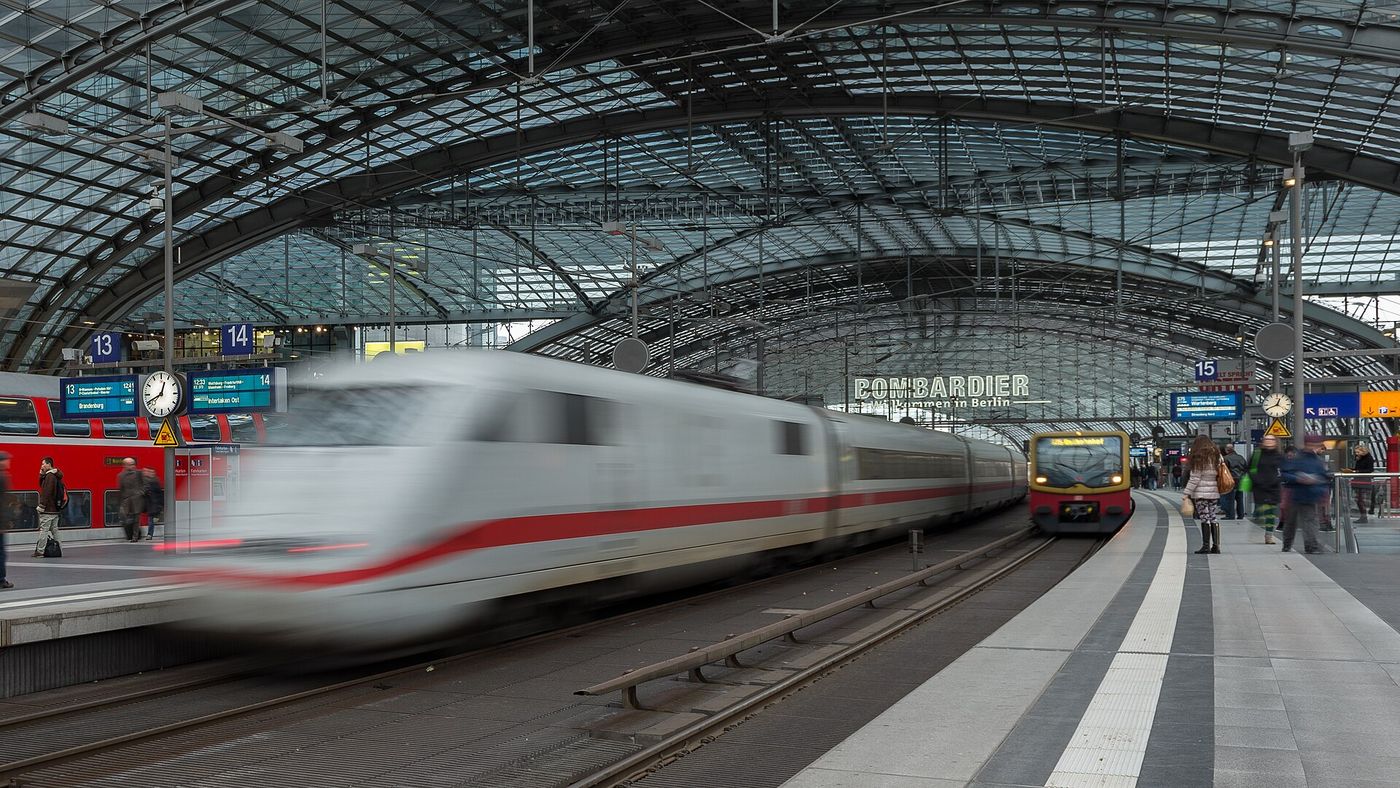
Germany's long-distance trains recorded their worst month for punctuality since the railway was privatised in 1994, with just 58.3% of ICE and Intercity services arriving within six minutes of schedule in September, according to figures published by Deutsche Bahn on Monday.
The number is a blow to a government that has promised €50bn over five years to rebuild the country's most heavily used lines, and it comes a week after the operator conceded that it would not reach its interim target of 70% punctuality by the end of 2026. The figure for 2025 as a whole was 62.1%.
Yet buried in the same release was evidence that the rebuilding programme works. The 280km corridor between Hamburg and Berlin, which was closed entirely for nine months while track, signalling and 28 stations were replaced, has run at 89% punctuality since it reopened in May. The Riedbahn between Frankfurt and Mannheim, rebuilt in 2024, is at 86%.
“The country is paying twice: once for the decades in which nothing was fixed, and once for fixing it,” said Dr Henrike Lassner, a transport researcher at the Technical University of Berlin. “The closures themselves cause delays everywhere else because trains are diverted on to lines that were already full. It will get worse before it gets better, and the operator has been honest about that only in footnotes.”
Deutsche Bahn attributed September's figure to the simultaneous closure of the Emmerich to Oberhausen freight corridor, a signalling failure at Cologne that stranded 140 trains on one evening and what it called an “exceptional” number of trespass incidents. A spokesperson said 41 further corridors would be rebuilt by 2031 and that each would be closed in full rather than repaired piecemeal, because “a half-closed line is a fully delayed one”.
For passengers the arithmetic is simpler. Katrin Vollmer, 44, commutes from Wolfsburg to Berlin three days a week and keeps a spreadsheet. “Since January I have had 27 days where I was more than half an hour late and four where the train did not come at all,” she said. “I used to be a railway romantic. Now I am a railway accountant.”
The passenger association Pro Bahn said the Hamburg-Berlin result showed that the problem had never been money alone. “Thirty years of maintenance was skipped because it was invisible,” a spokesperson said. “A new station is a ribbon to cut. Replacing a set of points is not.”
The next full closure, of the 120km line between Hamburg and Hanover, begins in January and will last until October 2027.
Sign up to First Edition
Our morning email breaks down the key stories of the day, telling you what's happening and why it matters.
Privacy notice: newsletters may contain info about charities, online ads and content funded by outside parties.

