
Lagos counts cost of worst October floods in a decade as new estates on the Lekki peninsula go under
Three days of rain put 40,000 homes under water in a district built on reclaimed wetland, with the city's drains unable to cope
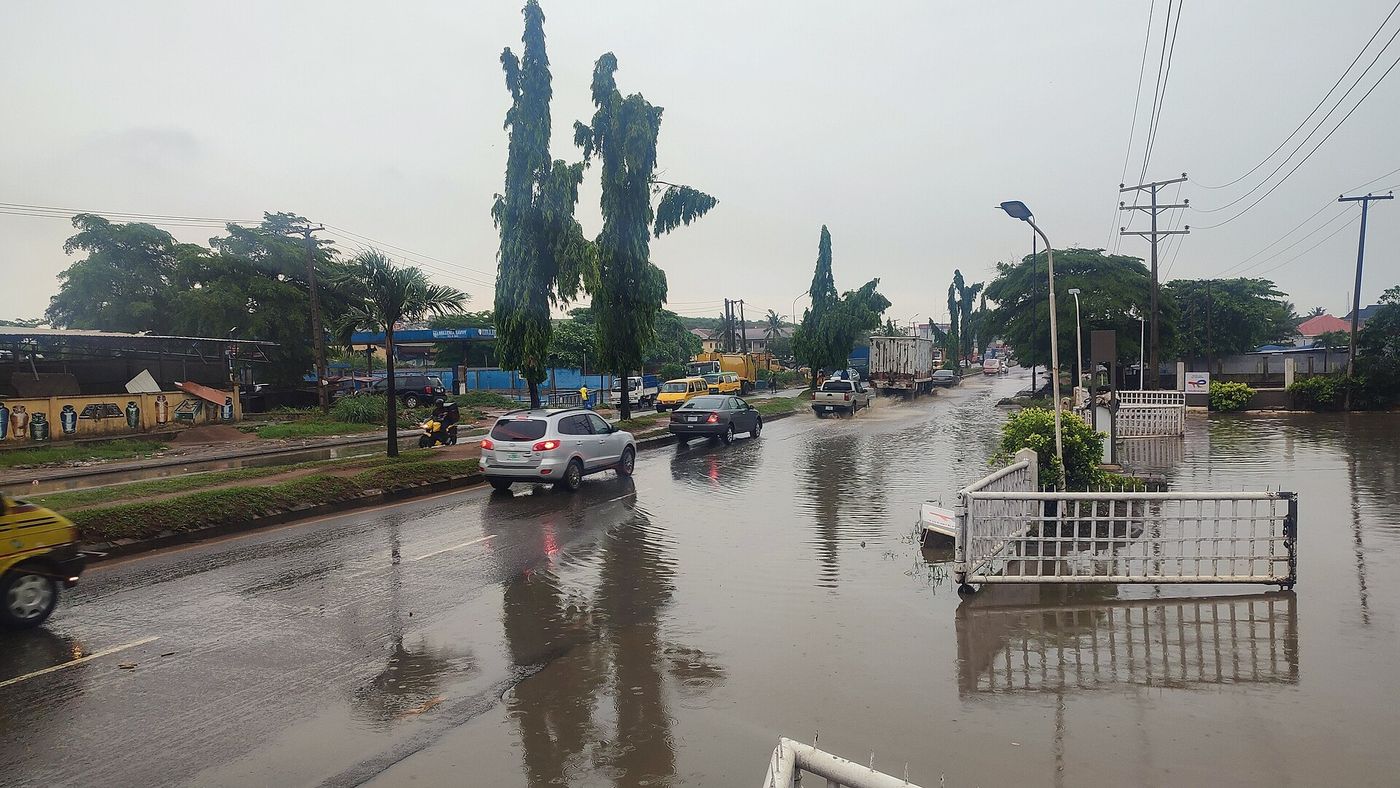
Floodwater was still standing in the streets of Lekki, the fast-growing peninsula east of Lagos island, on Monday, three days after the heaviest October rain in the city since 2016 put an estimated 40,000 homes under water and killed at least nine people.
Some 290mm fell on the city between Thursday and Saturday, more than the usual total for the month, and much of it on the Lekki-Epe corridor, where an estimated 1.5 million people now live in estates built over the last 15 years on sand-filled lagoon and wetland. The state emergency agency said 6,000 people had been moved to schools and churches and that the Lekki-Epe expressway, the peninsula's only road, had been closed for 30 hours.
Lagos, a city of more than 20 million people on a low-lying coast, floods every rainy season, but the October rains are normally the tail of the season rather than its peak. The state government said the volume of water was “beyond the design of any drainage system” and blamed developers who had built across natural channels. Residents blamed the government for approving the developments.
“I paid 85m naira for a four-bedroom house in an estate that was marketed as having its own drainage. The water came in on Friday night and it is still in my sitting room,” said Chidinma Okeke, 44, a bank manager who lives in an estate off the Orchid Road. “The estate's drains go into a canal. The canal goes into another estate. Nobody can tell me where it ends.”
Dr Tunde Adebayo, an urban planner at the University of Lagos, said the peninsula's problem was structural. “Lekki is a sand spit between a lagoon and the Atlantic. It is two metres above sea level at best. Every estate raises its own ground with fill and the water moves to the next one down,” he said. “The master plan from 2008 reserved corridors for drainage and green space. Almost all of them have been sold.”
The state has spent an estimated 30bn naira (£16m) on drainage in the corridor since 2020, including a 10km canal completed last year, which the government said had prevented worse flooding further east. Critics noted that the canal discharges into the lagoon, which was itself above its usual level after a week of rain in the catchment.
The floods come as the city is in the middle of two large coastal projects: the Lekki deep-sea port, which opened in 2023, and the Eko Atlantic development, a Dubai-style district built on 10 sq km of land reclaimed from the sea behind an 8km sea wall. Eko Atlantic was dry; its developers have said the wall also protects the Victoria Island district behind it. Hydrologists have questioned where the water the wall deflects now goes.
The rains are forecast to ease this week. The state's insurance regulator said fewer than 5% of the affected homes were insured against flood.
Sign up to First Edition
Our morning email breaks down the key stories of the day, telling you what's happening and why it matters.
Privacy notice: newsletters may contain info about charities, online ads and content funded by outside parties.

