
Pompeii dig uncovers walled garden with painted shrine and 2,000-year-old olive stones
Archaeologists in the Regio IX excavation found a courtyard garden preserved under 4 metres of ash, complete with the roots of its trees
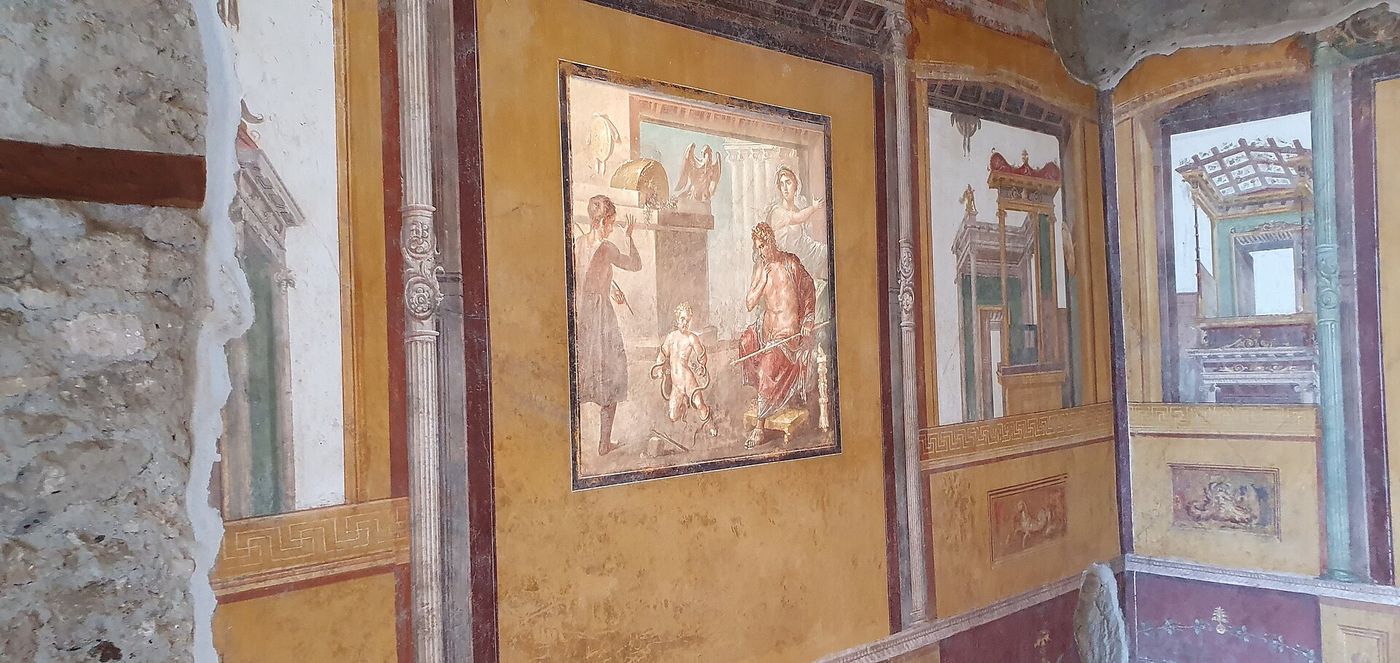
A walled garden with a painted shrine, a marble basin and the root cavities of six trees has been uncovered in Pompeii, the first substantially intact private garden to be excavated in the Roman city in more than 30 years.
The courtyard, about 11 metres by 8, lies behind a house in the Regio IX district, where a 3,200 sq m block has been under excavation since 2023. Archaeologists found the garden under four metres of volcanic material, which preserved not only its walls but the soil beneath, including carbonised olive stones, grape pips and the hollow left by a fig tree's roots.
On the north wall is a lararium, a household shrine, painted with two serpents approaching an altar and, above them, a scene of Venus bathing that the Pompeii Archaeological Park described on Monday as “of exceptional quality and almost untouched”. A marble basin fed by a lead pipe stood at the centre; the pipe still bears the stamp of the plumber who installed it.
“What we have here is not a grand garden but an ordinary one, which is rarer,” said Dr Serena Capaldi, who leads the excavation. “It belonged to a family of means but not of wealth. We can see what they planted, what they ate and what they prayed to. The olive stones were in a pot by the door. Someone was snacking on the morning of 24 October 79AD.”
Casts have been made of the root cavities, a technique pioneered at Pompeii in the 1970s but used rarely since. The park's botanists believe the trees were two olives, a fig, a pomegranate and two that have not yet been identified. Pollen analysis of the soil will take several months.
The find comes as the park records its busiest year, with 4.3 million visitors expected by December, and a daily cap of 20,000 in force since 2024. The director of the park has said that a third of the site's 66 hectares remains unexcavated and that the policy is now to dig only where structures are at risk, with the Regio IX block chosen because its walls were collapsing into the unexcavated ground.
Prof Alan Beresford, a classical archaeologist at Durham University who is not involved in the dig, said the plumber's stamp was in some ways the most useful object. “Names on lead pipes let us follow tradesmen across the city. If this man also worked on the baths, we can begin to date the garden to within a few years and work out how a middle-ranking household got its water,” he said.
The garden will be open to visitors from spring, viewed from a walkway above the excavation.
Sign up to First Edition
Our morning email breaks down the key stories of the day, telling you what's happening and why it matters.
Privacy notice: newsletters may contain info about charities, online ads and content funded by outside parties.

