
Shetland rocket reaches orbit in first successful vertical launch from British soil
Caledon Orbital’s 28-metre Skerry rocket lifted off from SaxaVord on Unst at 11.42am and placed four small satellites into a 550km polar orbit nine minutes later
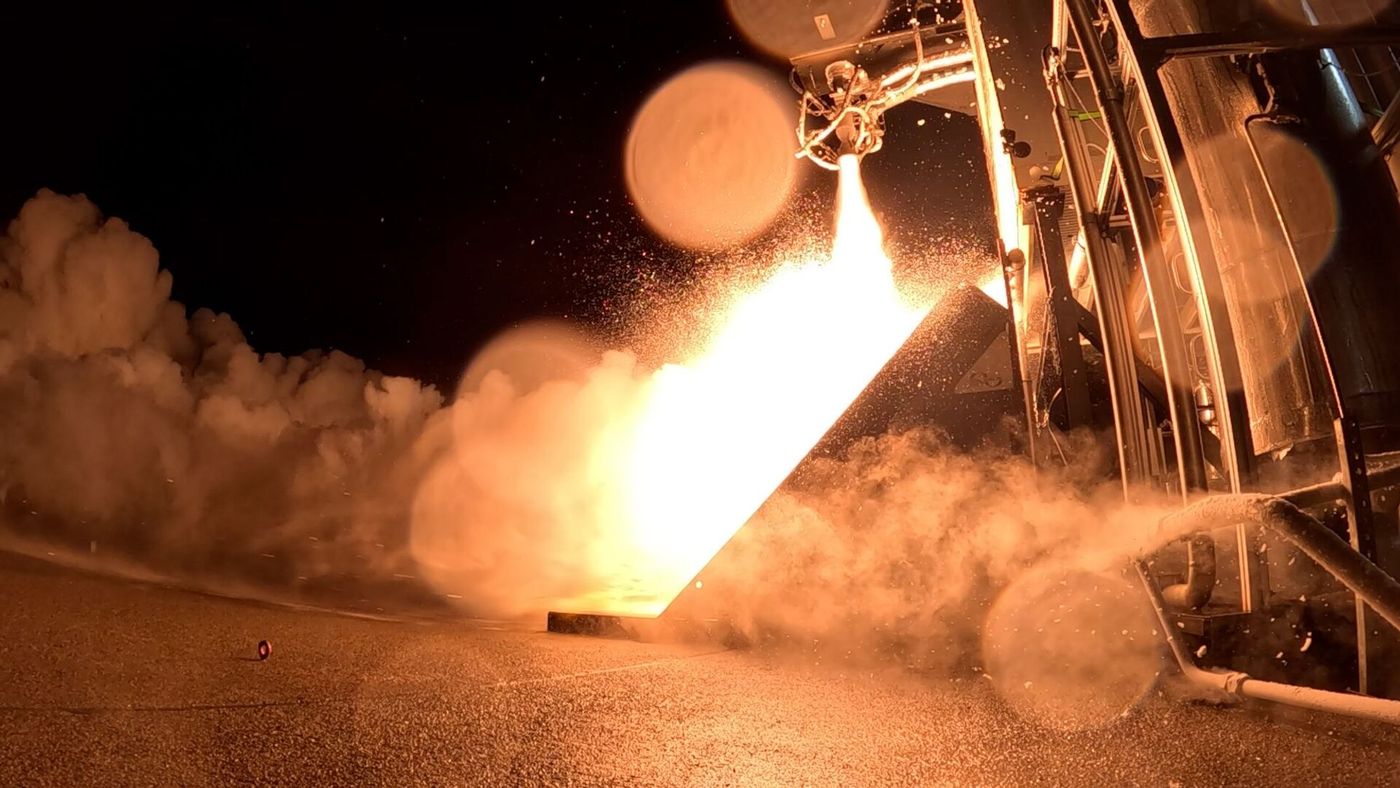
A rocket built in Glasgow and launched from a former RAF radar station on the island of Unst reached orbit on Saturday morning, the first time a satellite has been placed in space from a launch pad in Britain and the end of a decade-long effort that has twice ended in failure.
Caledon Orbital’s Skerry rocket, 28 metres tall and powered by nine kerosene engines, lifted off from the SaxaVord spaceport at 11.42am into a clear sky after two previous attempts in the week were scrubbed for wind. Nine minutes and 14 seconds later its upper stage released four small satellites, two for a Harwell-based Earth observation company and two for a Belgian university, into a 550km orbit passing over the poles.
About 300 people watched from a hillside above the pad, including the company’s 140 staff, who had flown up from Glasgow on three chartered aircraft, and most of the island’s 630 residents. A cheer went up at the point of stage separation, visible as a flare in the northern sky, and again when the mission director confirmed orbit over the public address system.
“We have lost two rockets in the sea off this island,” said Caledon’s chief executive, Dr Elspeth Marwick, 46, who founded the company in 2016 after a career at a European launch provider. “The second time, a lot of sensible people told us to stop. We are standing here because we did not, and because the people of Unst let us keep trying in their back garden.”
The launch makes Britain the first country in western Europe to send a satellite to orbit from its own territory. A horizontal launch from Cornwall in 2023, in which a rocket was released from a converted airliner, failed to reach orbit, and the company behind it folded. Caledon’s first attempt from SaxaVord in 2025 ended when the first stage lost thrust at 40 seconds; the second, in March, broke up at the point of separation.
The UK Space Agency, which has put about £60m into launch infrastructure in Scotland, said the success validated a strategy that has been criticised as expensive and slow. Britain builds more small satellites than any country except the United States, mostly in Glasgow and at Harwell in Oxfordshire, but has until now had to ship them to the US, India or French Guiana for launch.
Caledon has contracts for seven further launches, including a 12-satellite constellation for a British company that monitors methane leaks from pipelines, and says it aims to launch monthly by 2028. The Skerry can carry about 500kg to a polar orbit, a fraction of the capacity of the largest American rockets, but the company argues that small satellites bound for polar orbits are better served by a dedicated launch from a site this far north.
On Unst the mood was celebratory and slightly dazed. The island’s only hotel ran out of beer by 4pm. Jimmy Sutherland, 71, a retired crofter whose land borders the spaceport, said he had watched all three launches from the same gate. “First one went up and came down. Second one went up and came apart. This one went up,” he said. “That is all you can ask of a rocket.”
Sign up to First Edition
Our morning email breaks down the key stories of the day, telling you what's happening and why it matters.
Privacy notice: newsletters may contain info about charities, online ads and content funded by outside parties.

