
Kenya's geothermal plants now supply half its electricity as new Olkaria unit comes online
The 140MW station in the Rift Valley takes the country past a milestone reached by only Iceland and El Salvador
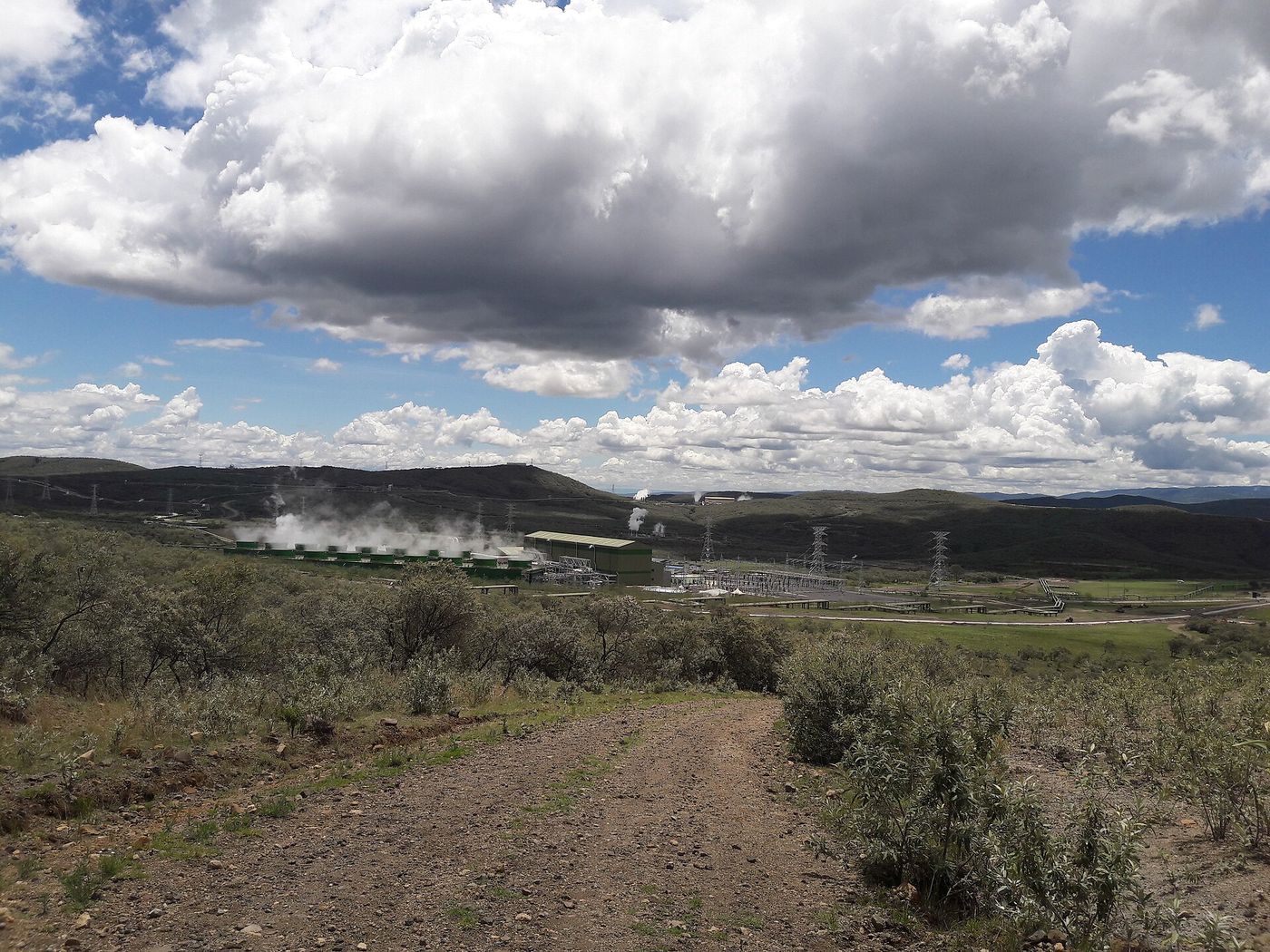
Kenya has become one of three countries in the world to generate more than half its electricity from the heat of the earth, after a 140MW geothermal unit at Olkaria in the Rift Valley was connected to the grid on Thursday.
The plant, the seventh at the Olkaria field 120km north-west of Nairobi, takes the country's geothermal capacity to 1,100MW and its share of generation in the year to September to 51%, according to the state generator KenGen. Hydroelectric dams supply 18%, wind and solar 17% and imported and thermal power the rest. Only Iceland, at about 70%, and El Salvador, at just over 50%, draw a larger share from geothermal.
The Rift Valley, where the African continent is slowly pulling apart, offers Kenya an estimated 10,000MW of geothermal potential, of which about a tenth has been tapped. Unlike wind and solar, geothermal plants run around the clock, and KenGen said the new unit would allow it to retire two diesel-fired stations near Mombasa that cost four times as much per unit to run.
“When I started at Olkaria in 2009 we had 150MW and people thought it was a science project,” said Wanjiru Kamau, a reservoir engineer at KenGen. “Now the grid would collapse without it. Every borehole we drill is a 20-year asset that does not care about the rains or the oil price.”
Kenya's electricity has been reliable enough since 2023 to attract data centres and a planned electric vehicle assembly plant, and the government has promoted geothermal as the basis for a green manufacturing economy. The cost of power to industry, at around 15 US cents a kilowatt-hour, remains high by regional standards, mainly because of the cost of transmission and of the diesel plants that are now being closed.
The expansion has not been without conflict. The Olkaria field lies within Hell's Gate national park and alongside land used by Maasai pastoralists, several hundred of whom were resettled in 2014 to make way for an earlier plant. Joseph Ole Sankale, a community representative in the resettlement village of RAPland, said the new unit had been built with a benefit-sharing agreement that the earlier ones lacked. “We get 2% of the revenue, a clinic and jobs for 40 of our young people. That is not what was promised in 2014, but it is what is being delivered now,” he said.
Three further Olkaria units with a combined capacity of 280MW are under construction, and KenGen is drilling at a second field, Menengai, near Nakuru. The government's target is 3,000MW of geothermal by 2035.
Ethiopia, Tanzania and Djibouti, which share the Rift, have drilling programmes of their own, several of them staffed by Kenyan engineers.
Sign up to First Edition
Our morning email breaks down the key stories of the day, telling you what's happening and why it matters.
Privacy notice: newsletters may contain info about charities, online ads and content funded by outside parties.

